While safety is essential across all industries, it holds particular significance in high-risk environments like construction and other blue-collar sites. These sites demand meticulous attention to safety protocols, with a focus on fall protection equipment and high visibility apparel.
Keep reading to delve into the importance of safety on construction sites and explore the crucial role of fall protection gear and high visibility apparel in ensuring the well-being of workers!
Construction Site Safety
Construction sites are bustling hubs of activity, often involving heavy machinery, elevated working areas, and potential hazards. Prioritizing safety on these sites is extremely important to prevent accidents, protect workers, and minimize the risk of injuries. Adopting a comprehensive safety culture involves implementing effective safety programs, conducting regular training sessions, and providing the right equipment and protective gear.
Fall Protection Equipment
One of the leading causes of injuries and fatalities on construction sites is falls from heights. To mitigate this risk, fall protection equipment plays a vital role. Harnesses, lanyards, lifelines, and anchors are some of the essential tools that can prevent falls and protect workers when working at elevated levels. By using these devices correctly and regularly inspecting them for wear and tear, workers can significantly reduce the likelihood of accidents.
Visibility is a crucial factor in ensuring safety on construction sites. Workers must remain visible to their colleagues and equipment operators, especially in low-light conditions or areas with heavy machinery. High visibility apparel, such as reflective vests, jackets, and shirts, enhance worker visibility and reduce the risk of accidents caused by inadequate recognition.
Safety on construction sites can only be effective when accompanied by adequate training and education. Employers must provide comprehensive safety training to all workers, educating them on the proper use of fall protection equipment, the importance of high visibility apparel, and general safety protocols. Regular refresher courses should be conducted to reinforce safe practices and ensure workers remain up-to-date with the latest safety guidelines and regulations.
Collaboration and Communication
Safety on construction sites requires collaboration and effective communication among all stakeholders. Employers, workers, supervisors, and safety officers must work together to identify potential hazards, address safety concerns promptly, and enforce safety protocols. Open lines of communication allow for the reporting of near misses, unsafe conditions, and accidents, fostering a proactive approach to safety.
As we observe National Safety Month, it is vital to highlight the significance of safety in high-risk environments such as construction and other blue-collar sites. Fall protection equipment and high visibility apparel play critical roles in safeguarding workers and preventing accidents. By fostering a safety-conscious culture, investing in proper equipment, and promoting comprehensive training, we can create safer work environments and protect the well-being of those who build our cities and communities.
Let us prioritize safety every day, not just during National Safety Month, to ensure a secure and thriving workforce in the construction industry!
Load Protection • Flexibility • Capacity • Cost
Web Slings vs. Round Slings: Which Sling Type is Right for You?
Choosing the right lifting sling boosts safety, protects your load, and speeds up workflow. Here’s a quick, practical guide to when you should pick a round sling vs. a web sling—plus links to shop both.
Read more
What Are Round Slings?
Round slings (endless slings) are continuous loops of high-strength polyester wrapped in a protective sleeve. Their soft, flexible build helps them conform to the load and spread pressure evenly.
Advantages
Flexibility: Conforms to curves and odd shapes for smoother, even bearing.
Load Protection: Sleeve helps guard delicate or polished surfaces.
Lightweight: Easy to carry, rig, and store in tight spaces.
Shop Round Slings:
What Are Web Slings?
Web slings are flat woven polyester or nylon slings with reinforced eyes at each end. They’re offered in single-, double-, or multi-ply options and can be paired with hooks or shackles.
Advantages
Strength & Durability: Excellent tensile strength for demanding lifts.
Versatility: Many widths/plies and hardware options for varied hitches.
Cost-Effective: Often the best value for frequent general lifting.
Shop Web Slings:
Key Differences (At a Glance)
Factor
Round Slings
Web Slings
Shape & Build
Endless loop with protective sleeve
Flat woven web with eyed ends
Load Distribution
Excellent; conforms to the load
Good; may create pressure lines if not padded
Surface Protection
High—sleeve cushions contact areas
Moderate—use edge guards/padding as needed
Handling
Very flexible; easy around odd shapes
More control on flat faces and straight picks
Typical Value
Lighter, protective; often higher cost
Durable, versatile; strong cost value
How to Choose the Right Sling
Load Characteristics: Delicate/finished surfaces → round slings. Rugged or flat loads → web slings.
Capacity Needs: Match Working Load Limit (WLL) for hitch type (vertical, choker, basket).
Environment: Consider temperature, chemicals, UV, and edges—add corner protection where needed.
Choosing the right sling improves safety, protects your load, and speeds up rigging. Below we break down round slings and web slings, how to use them, and the key differences so you can pick the right tool for the lift.
Read more
_____
What Are Round Slings?
Round slings are continuous loops of synthetic fiber (often polyester) inside a protective sleeve. The sleeve guards the core from abrasion while the soft body conforms to the load.
Why they’re popular: excellent flexibility, gentle on polished/delicate finishes, lightweight to carry and store. Available in multiple lengths and color-coded capacities.
How to Use a Round Sling
Inspect: Remove from service if you see cuts, snags, heat damage, or illegible tags.
Select: Choose capacity above the load and the planned hitch (vertical, choker, basket).
Configure: Position to avoid sharp edges or use corner protection.
Attach: Use rated hooks/shackles; align with the load’s center of gravity.
Lift: Keep lines straight; avoid shock loading, twisting, or dragging.
Re-inspect: Check again after use before storage.
_____
What Are Web Slings?
Web slings are flat woven nylon/polyester slings with reinforced eyes (eye-and-eye) or endless loops. They come in single-, double-, or multi-ply builds and pair well with common rigging hardware.
Why they’re popular: strong and durable, many sizes/plies, great value for general lifting across hitch types.
How to Use a Web Sling
Inspect: Look for cuts, burns, broken stitching, chemical damage, or crushed areas.
Select: Match WLL to load and hitch; consider sling width/ply for bearing area.
Configure: Add edge guards on sharp corners; avoid knots or twists.
Attach: Use rated hardware; keep sling angle within limits to avoid overload.
Lift: Raise smoothly; never exceed WLL; keep clear of suspended loads.
Maximizing Your Safety with Reflective Tape: Placement, Quality, and Visibility
Reflective tape isn’t a style choice—it’s a life-saving feature. Smart placement and durable, high-candela tape make workers visible at night, in storms, and in dim warehouses.
Read more
The Science of Reflective Tape
Retroreflective tape returns light to its source, so headlights and forklifts “see” you even in darkness. Unlike fluorescents, it doesn’t rely on sunlight. Reflectivity is measured in cd/lx/m²—higher numbers mean brighter returns at distance.
Optimal Placement (for 360° Visibility)
Placement should outline the human form and highlight movement. Aim for continuous bands that are visible from all sides.
Area
Why It Helps
Best Practice
Torso (upper/lower)
Eye-level recognition for drivers/operators
Full bands around chest and waist for all-angle visibility
Arms & Shoulders
Motion catches attention
Two bands per sleeve—bicep and wrist
Legs
Walking movement signals presence
Bands at thighs and shins; don’t restrict mobility
Flexibility & Comfort: Stretch or segmented tape moves with the body.
Durability & Wash: Choose tape rated to retain brightness after many wash cycles.
Weather Performance: Maintain reflectivity when wet, cold, or hot.
Application Method: Heat-sealed is light and breathable; sewn-on is rugged and field-repairable.
Care Essentials (Keep It Bright)
Wash inside-out, cold, gentle cycle; no bleach or fabric softener.
Tumble dry low or hang dry; remove promptly.
Spot clean tape gently—avoid abrasive scrubbing.
Making the Right Choice
Select garments with continuous torso bands, sleeve and leg accents, and a clear back pattern. Pair quality tape with proper care and you’ll keep visibility high, shift after shift.
Lineman vs. Diagonal • Cutting Power • Ergonomics • Use Cases
Highlighting PINZA Pliers
We added two jobsite workhorses to pair with our ironworker lineup. Below, see how PINZA Lineman Pliers compare with PINZA Diagonal Cutting Pliers—and when to grab each one.
Read more
_____
What are the types of pliers and their applications?
There are many plier styles in the field, but for everyday ironwork and site tasks, lineman and diagonal cutters cover the widest range.
_____
Know the difference (at a glance)
Feature
PINZA Lineman Pliers
PINZA Diagonal Cutting Pliers
Primary Role
Grip, twist, crimp, general cutting
Precision cutting of wire/fasteners
Cutting Edges
Heat-induction knife edges
Sharpened, heat-induction knife edges
Ergonomics
Spring-loaded; replaceable spring
Slim profile for close flush cuts
Grip Texture
Crosshatch knurled jaws for traction
Cutting-focused jaws; minimal grabbing
Best For
Tie wire, twisting, pulling, multi-task
ACSR wire, screws, nails, hardened wire
_____
PINZA Lineman Pliers
The lineman pliers are spring-loaded for faster, low-fatigue cycling. If the spring wears, it’s user-replaceable. Crosshatch knurled jaws increase bite versus single-groove patterns.
_____
PINZA Diagonal Cutting Pliers
Built with sharp, heat-induction edges for confident cuts through ACSR, screws, nails, and most hardened wire. Purpose-built for clean, close cutting where precision matters.
_____
Video: See PINZA in action
_____
Shop the lineup + FAQs
Make sure you’ve got the right tool for the task. Browse our Ironworker Tools and visit the FAQ for answers.
Work Positioning • Ergonomics • Tool Carry • Not Fall Arrest
What Is a Safety Positioning Belt?
Positioning safety belts help workers hold a stable working stance at height so both hands stay free. Used with a positioning lanyard and an approved anchor, they reduce fatigue and improve accuracy—but they are not a fall-arrest device.
Read more
_____
How a Positioning Belt Works
The belt’s side D-rings connect to a work-positioning lanyard that you tension against a structure. This “leans” you into the task, holding your body in place while you work with both hands.
Use with anchors/lanyards rated for positioning.
Keep a separate fall-arrest system if a fall hazard exists.
Adjust snugly at the lumbar—no slack that could shift under load.
_____
Key Benefits
Ergonomics: Neutral stance reduces back/arm fatigue over long shifts.
Productivity: Stable body position improves precision and speed.
Tool Carry: Compatible with pouches/attachments for fast access.
Consistency: Repeatable setup for repetitive tasks at set heights.
_____
Belt vs. Harness (Know the Difference)
Feature
Positioning Belt
Full-Body Harness
Primary Function
Holds worker in place to work hands-free
Arrests a fall and distributes forces
Typical Connectors
Side D-rings + positioning lanyard
Back/front D-rings + energy absorber/SRL
Fall Arrest?
No — not for free-fall arrest
Yes — used for fall arrest/restraint
Best Use
Ironwork, rebar tying, utility pole bracing
Any task with fall exposure
_____
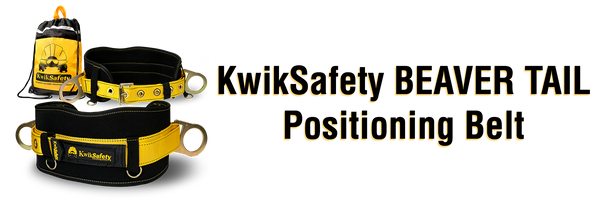
Featured: BEAVER TAIL Safety Belt
Looking for a versatile, OSHA-compliant belt for ironwork and general trades? Meet the BEAVER TAIL Safety Belt.
2 side D-rings for secure positioning hookups
Back support padding for all-day comfort
Tool-friendly design for pouches and bags
OSHA compliant when used as part of a proper positioning system
_____
Common Questions
Is a belt a substitute for a harness? No. Use a full-body harness with energy absorption for fall arrest wherever a fall risk exists.
When should I choose a belt? When you need stable, hands-free work positioning on a structure—and you have separate fall protection if required.
What It Is • Materials • Use Cases • Hitch Types • Inspection
What Is a Web Sling?
A web sling is a flexible, high-strength synthetic sling (typically nylon or polyester) used with cranes, hoists, or forklifts to lift and position heavy loads safely.
Read more
_____
Why choose a web sling?
Lightweight & flexible: Conforms to loads and works in tight spaces.
Surface friendly: Broad, flat web helps distribute pressure.
Durable: Resists many chemicals, UV, and moisture with proper care.
_____
Common applications
Construction, manufacturing, shipping, and rigging tasks—lifting machinery, beams, blocks, and pipe where gentle contact and control are key.
_____
Safe use & inspection
Confirm the sling is rated for the actual load and hitch method.
Inspect for cuts, burns, chemical damage, broken stitching, and illegible tags—remove from service if found.
Protect against sharp edges with corner guards or padding.
Follow the tag for angle effects and never exceed rated capacity.
_____
KwikSafety MIGHTY SUMO Web Slings
MIGHTY SUMO slings cover approx. 3,200–6,400 lb ranges across sizes. Flat polyester webbing maximizes contact, with a safety label showing hitch types and key specs. Each sling includes a certificate of conformity.
_____
Hitch types (quick guide)
Hitch
Best For
Notes
Vertical / Straight
Single pick point
One leg straight down from hook; control load swing.
Choker
Securing bundles/pipe
Reduces capacity; avoid crushing damage; don’t force choke tight.
Basket
Balanced loads
Two lifting points; capacity varies with angle—follow tag.
Low-Light Science • ANSI/ISEA 107 • Use Cases • Care & Fit
Enhancing Safety in Low-Light Conditions:
We live and work around the clock. In dim, dusk, or night settings, being seen is non-negotiable. Hi-vis apparel helps workers, cyclists, and pedestrians stand out so close calls don’t become incidents.
Read more
_____
The Science Behind Visibility
Retroreflective tape returns light toward its source—think vehicle headlights—so you pop in darkness or rain. Fluorescent fabrics boost contrast in daytime and low-UV conditions like dawn or overcast skies. Together, they create 24/7 visibility.
Spring Guide • Hi-Vis Apparel • Rain Gear • Fall Protection
Spring Safety Gear Essentials
Welcome to our springtime shopping guide—your one-stop list for hi-vis gear and safety essentials that balance function and style.
Whether you’re on a jobsite or outdoors for weekend projects, our apparel and fall-protection picks help you stay visible and protected.
Read more
_____
Latest Trends
This spring, practicality and comfort lead the way. Moisture-wicking shirts and lightweight shells keep crews cool without sacrificing visibility.
Personalized fit is in: adjustable straps, venting, and ergonomic cuts make gear easier to wear all shift long.
_____
Must-Haves & Essentials
From hi-vis apparel and rain gear to fall protection and smart accessories, here are the season’s standouts. Browse the must-haves below! ⬇️
_____
🦺 BREATHABLE SAFETY VESTS 🦺
_____
👕 MOISTURE-WICKING SAFETY SHIRTS 👕
_____
🌧️ HIGH-VIS RAIN GEAR 🌧️
_____
🪶 LIGHTWEIGHT SAFETY JACKETS 🪶
_____
⚙️ ERGONOMIC WORK GEAR ⚙️
_____
♾️ TIMELESS ESSENTIALS ♾️
_____
Compliance You Can Trust
Our hi-vis apparel and fall-protection gear are ANSI tested and are OSHA compliant, ensuring dependable performance when used as part of a proper safety program.
_____
Wrap-Up
Gearing up for a jobsite shift or a weekend hike? Let KwikSafety be your spring partner in safety and style. With quality builds and thoughtful design, you’ll be ready for whatever the season brings.
Steel positioning lanyards help ironworkers and other pros hold a steady work position on vertical structures while keeping both hands free. Used correctly, they boost precision and reduce fatigue.
Read more
_____
What Is a Steel Rebar Positioning Lanyard?
A rebar chain assembly is a steel link or cable lanyard that connects the harness side D-rings to a rebar structure or anchor. It’s built for work positioning and restraint—not fall arrest.
_____
Why It Matters
Stability = productivity: Locks you into a steady stance for tying, placing, or cutting rebar.
Hands-free control: Keeps you in position while you work tools with both hands.
Tough by design: Steel resists heat, edges, and abrasion better than webbing in rebar work.
Versatile: Ideal for ironwork, formwork, towers, and similar vertical builds.
_____
Safety Rules That Don’t Budge
Not fall arrest: Pair with a full PFAS when fall hazards exist.
Side D-rings only: Never clip a positioning lanyard to the dorsal D-ring.
Limit free fall to ≤ 2 ft for positioning applications.
Anchors: Use anchorages rated for positioning systems per OSHA; use self-locking hooks to prevent rollout.
_____
Quick Setup Checklist
Inspect chain, hooks, labels, and keepers; remove if cut, bent, or unreadable.
Attach each hook to approved rebar/anchor; confirm full gate closure.
Connect to side D-rings; adjust length to hold firm working posture.
Back-up with separate fall arrest if exposure exists.
_____
Choosing the Right Assembly
Length/adjustability: Short enough to prevent over-reach; easy fine-tuning on structure.
Hook style: Rebar (large-gate) self-locking hooks speed connects on tower/rebar.
Hardware rating: Verify marked strength and gate requirements.
Environment: Choose steel where heat, slag, or edges threaten webbing.
_____
Compliance Note
Our rebar chain assemblies are ANSI tested and are OSHA compliant, ensuring dependable performance when used as part of a proper positioning or restraint system.
Awareness Month • Construction Perspective • Visibility
A Construction Worker's Perspective on Distracted Driving Awareness Month
Read more
As April rolls in, so does an important reminder: Distracted Driving Awareness Month. Beyond drivers, roadside crews face the danger directly. Every shift demands focus—one glance at a phone can put a worker’s life at risk.
Hi-vis gear is a frontline defense. Bright fluorescence pops in daytime; reflective tape kicks in at night and in storms. Together, they help motorists see, slow, and steer clear.
_____
High-Visibility Gear & Its Purpose
Construction zones are packed with machines, materials, and moving people. Visibility narrows the margin for error. Hi-vis vests, shirts, and jackets act like beacons so operators and drivers spot you sooner.
⬇️ Roadside hi-vis essentials to boost your safety ⬇️
Hi-vis also works on awareness. Those bold hues and reflective bands cue drivers to slow down, follow signs, and give crews room to work.
_____
Safety Equipment, Protocols, & Training
Gear is one layer. Add traffic control plans, barriers, cones, and clear radios. Refresh training often and enforce speed and buffer zones. Tech like flashing beacons and automated warning systems can add extra protection.
Compliance note: Our hi-vis vests, shirts, and jackets are ANSI tested and are OSHA compliant, ensuring reliable visibility when used as directed on active roadways.
_____
Respect the Crew—Stay Focused
This month, remember the people building and repairing our roads. Keep eyes up and phones down. When we all cut distractions, everyone gets home safe—on the job and on the drive.
Safety Jackets: Which Features Are Essential for Cold Weather?
Read more
As temps drop and days shorten, the right safety jacket keeps you warm, visible, and productive. Below is a quick checklist of must-have features so you can choose with confidence.
_____
Insulation
Insulation traps heat without bulk. Look for down, synthetic fill, or fleece linings that balance warmth and mobility for all-day wear.
_____
Water Resistance
Rain, sleet, and snow happen. A DWR finish helps water bead and roll off so layers stay dry and warm.
_____
Wind Resistance
Cold wind steals heat fast. Choose wind-resistant fabrics and features like adjustable cuffs and a tall collar to seal out drafts.
_____
High-Visibility
Stay seen in dim light. Bright fabric plus retroreflective tape improves 24/7 visibility for crews and commuters alike.
Note: All KwikSafety jackets include reflective elements for visibility on site and on the road.
_____
Multiple Pockets
Keep gloves, tools, and ID close. Interior and exterior pockets add organization and quick access without shedding layers.
_____
Adjustable Features
Dial in fit for task and weather. Adjustable cuffs, drawcord hem, and a removable hood help seal heat and boost comfort.
_____
Breathability
Work hard without overheating. Breathable linings and venting let moisture escape so you stay dry from the inside out.
_____
Durability
Choose abrasion-resistant fabrics and reinforced stitching for long service life through winter grind and daily wear.
Our safety jackets are ANSI tested and are OSHA compliant, ensuring reliable visibility and performance when used as directed.
Prioritize insulation, weather protection, visibility, storage, adjustability, breathability, and durability. With the right mix, you’ll stay warm, seen, and ready for anything this season.
Ironworking • Work-Positioning Systems • Buyer’s Guide
The Ultimate Guide to Safety Positioning Belts
Read more
Ironworking demands steady footing at height. A safety positioning belt helps you hold a stable working stance so both hands stay free. It is not a fall-arrest device—use it with a full-body harness and a positioning lanyard, and maintain a separate fall-arrest system whenever a fall hazard exists.
_____
Purpose of Safety Positioning Belts
Provide lateral stability for hands-free tasks on rebar, columns, or edges.
Connect at the side D-rings to a positioning lanyard (e.g., rebar chain assembly).
Reduce fatigue by supporting the lower back during fixed-position work.
_____
Key Factors to Consider
Comfort & Support: Contoured pad, breathable lining, and wide back support reduce pressure points.
Adjustability: Multiple fit points and quick buckles for layering over winter gear.
Hardware: Rated side D-rings, secure tool rings, and rugged keepers for lanyard parking.
Compatibility: Fits your harness, aligns D-rings at the hips, works with rebar chain/positioning lanyards.
Compliance Use: Follow OSHA rules for positioning systems; use ANSI-rated positioning lanyards. Belts are for work positioning only, not fall arrest.
_____
Sizing & Fit
Measure at the natural waist over typical work layers.
D-rings should sit at or just above the hips for balance.
Snug, not restrictive—aim for a two-finger gap at the pad edge.
_____
Set-Up & Safe Use
Inspect belt, webbing, stitching, and hardware before each use.
Don the belt (or harness + belt combo) and center the back pad.
Connect a positioning lanyard to both side D-rings; adjust for a stable stance.
Maintain fall arrest: Stay tied off at the dorsal D-ring when a fall hazard exists.
Limits: Do not climb, travel, or arrest a fall on the belt. Keep anchors rated and at/above work level.
_____
Inspection, Care & Retirement
Retire after any load event or if cuts, glazing, rust, or loose stitching appear.
Clean with mild soap and water; air dry away from heat/sun.
Store cool and dry; avoid chemicals and sharp edges in the gang box.
_____
Quick Buyer Checklist
Padded, contoured back support
Dual side D-rings + stout tool rings
Wide size range and easy adjusters
Heavy webbing + reinforced stitch
Plays nice with your harness & lanyards
Clear labels and user instructions
_____
Shop Positioning Belts
Now Featuring Shoulder Support
Reminder: A positioning belt stabilizes you for hands-free work. For fall arrest, always wear a full-body harness with an appropriate ANSI-rated lanyard or SRL and a proper anchor.
Business Purchasing • Volume Discounts • Payment Flexibility
Get More for Less: Bulk Ordering & Split-Payments
Read more
Buying in volume lowers your per-unit cost and reduces admin time. Fewer POs and consolidated shipments mean less paperwork, faster receiving, and simpler reordering.
Time savings: One quote, one invoice, coordinated freight.
Inventory confidence: Reserve stock for upcoming projects.
_____
Split-payments made easy
Have a per-transaction cap on a company card? We can split your total across multiple transactions so approvals go through without delay—no lost discounts, no headaches.
Divide across multiple charges to the same card.
Or split between multiple cards (corporate, purchasing, etc.).
Schedule charges on the same day or separate days as needed.
The Importance of Regular Safety Training Each Year
Read more
Yearly safety training keeps crews sharp as jobsites, tools, and rules change. Refreshers reinforce good habits, close knowledge gaps, and build a culture where everyone watches out for one another.
_____
Reducing Workplace Accidents
Annual refreshers improve hazard recognition, lock in safe routines, and cut near-misses. Revisit stop-work authority, spotter roles, and line-of-fire risks so small mistakes don’t become recordables.
_____
Compliance with Regulations
Regulatory requirements evolve. Routine training helps align procedures, signage, and PPE with current standards, reducing citations and keeping documentation audit-ready.
_____
Increased Employee Confidence
Practice builds calm, clear decision-making under pressure. Confidence helps workers speak up, report hazards early, and follow checklists when conditions change.
_____
Enhanced Skill Development
Hands-on drills—ladder setup, lockout/tagout steps, spotter signals, harness donning—turn policy into muscle memory. Skills stick when practiced, not just read.
_____
Adaptation to New Technology
New tools, equipment, and PPE appear yearly. Training covers model updates, limitations, and maintenance so teams deploy tech safely and effectively.
_____
Team Collaboration & Communication
Tabletop scenarios and toolbox talks sharpen radio etiquette, hand signals, and role clarity. Better coordination prevents confusion-related incidents.
_____
Make It Stick: Cadence & Methods
Onboarding: Core policies, PPE basics, site orientation.
Need reliable PPE for your next training cycle? Explore hi-vis apparel, fall protection, hard hats, and rain gear at KwikSafety to keep your team equipped for the job.
A Better Fit, A Safer Workplace: Introducing Our New Extended Sizing Safety Apparel
Read more
Proper fit isn’t just comfort—it’s safety. Ill-fitting PPE snags on equipment, restricts movement, and tempts workers to take gear off. Our expanded sizing makes it easier for every body to gear up right.
_____
What’s New
More sizes across popular styles—built for real-world body shapes.
Same materials, stitching, and pocket layouts as standard sizes.
Consistent visibility: tape placement scaled for 360° reflectivity.
Adjust: Use tabs, cuffs, hems, and hoods to fine-tune fit.
Mobility test: Squat, reach, and twist—no pulling at seams.
No gaps: Avoid loose areas that can snag on equipment.
No interference: PPE should play nice—hard hat, eyewear, and harnesses must fit together.
_____
Get the Right Size, Fast
Need help building a size run for your crew? We can mix sizes and styles so everyone is covered. See our extended selection and outfit teams with confidence.
Construction Companies & Contractors Paint Equipment Pink to Raise Awareness
Read more
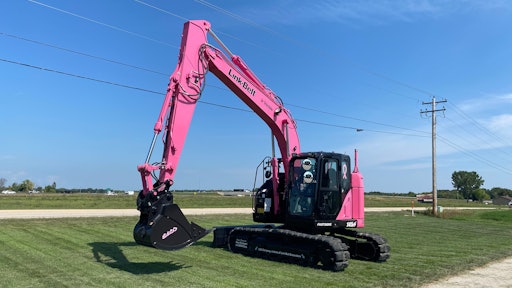
Across jobsites, contractors are turning equipment pink to champion breast cancer awareness. The bold color sparks conversations, honors loved ones, and highlights prevention and support resources.
_____
The Power of Pink
Pink is a symbol of hope and solidarity. When it shows up on excavators, compressors, and guarding, it’s a highly visible reminder to care for our communities—on and off the site.
_____
Spotlight: Industry Initiatives
Link-Belt — “Diggin’ for a Cure”: A pink excavator toured the U.S. and was auctioned to fund early detection and patient support programs. Learn more.
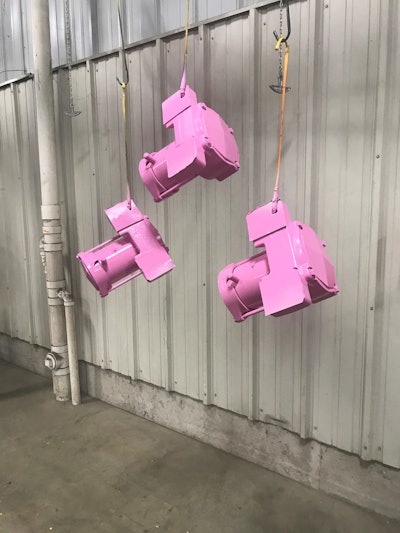
Martin Engineering: Swapped its signature orange on visible components for Breast Cancer Awareness pink—turning conveyors and access points into daily reminders. See details.
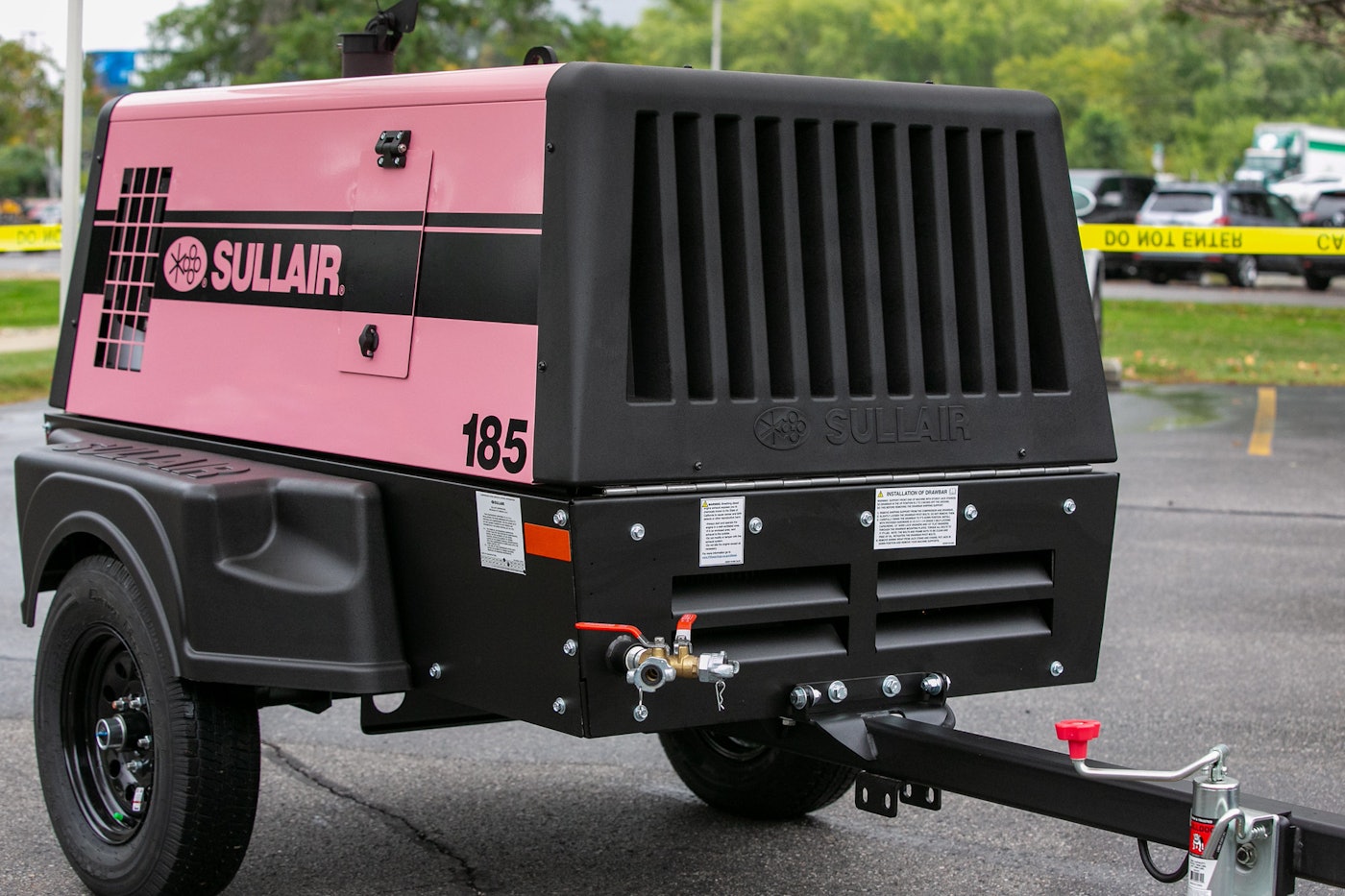
Sullair: A one-of-a-kind pink 185 Series portable compressor raised funds at the ARA Foundation Charity Auction—bought by Texas First Rentals. More info.
_____
Why Contractors Join In
Community Engagement: Reinforces local ties and support for families affected.
Affecting Change: Eye-catching equipment drives awareness and action.
Personal Connections: Many crews have teammates or loved ones impacted.
_____
The Impact
Awareness: Equipment becomes a mobile billboard for screening and support.
Fundraising: Auctions, events, and donation drives back research and care.
Employee Pride: Crews rally around a meaningful, unifying cause.
Ripple Effect: Inspires other industries to participate.
_____
How Your Crew Can Participate
Go Pink (Safely): Use wraps, panels, or decals; keep safety/ID labels visible.
Host a Drive: Match employee donations or sponsor screenings.
Wear Pink PPE: Hi-vis accents, helmet decals, and awareness patches.
Communicate: Post signage with screening resources and local clinics.
Follow us for more crew stories and safety spotlights:
_____
Empresas de Construcción y Contratistas Pintan Equipos de Rosa
La maquinaria rosa en obra envía un mensaje de esperanza y apoyo a quienes enfrentan el cáncer de mama. Estas acciones fomentan la concienciación, recaudan fondos y unen a los equipos con sus comunidades.
Poder del Rosa: Un símbolo visible que impulsa conversaciones y chequeos.
Compromiso: Donaciones, subastas y eventos benefician programas locales.
Participa: Usa vinilos/pegatinas, organiza donaciones y comparte recursos de salud.
Mental Health Awareness in the Construction Industry
Read more
The job is tough—long hours, heavy risk, tight schedules. Alongside physical hazards, mental strain can build into anxiety, depression, and burnout. Raising awareness saves lives and strengthens teams.
_____
Why it matters
The construction workforce faces elevated suicide risk compared to many sectors. Contributing factors include long shifts, travel, seasonal layoffs, chronic pain, substance misuse risks, and job insecurity.
Drop in quality or attendance; frequent near-misses.
Talking about being a burden or feeling trapped.
Increased alcohol/drug use or risky on-site behavior.
Sleep issues, fatigue, or unexplained physical complaints.
_____
Build a supportive culture
Education & training: Teach supervisors to recognize warning signs and respond.
Support programs: Offer or promote confidential EAP/telehealth counseling.
Open communication: Make mental health a standing toolbox topic.
Work–life balance: Manage overtime; schedule breaks and rotations.
Peer support: Buddy systems and peer champions on each crew.
Easy access: Post helplines, QR codes, and local resources in break areas.
_____
Supervisor playbook
Hold regular 1:1 check-ins; listen without judgment.
Use clear, supportive language; avoid minimizing concerns.
Protect privacy; never retaliate for asking for help.
Adjust duties or schedules temporarily when needed.
After tough incidents, debrief and connect workers to care.
_____
Crew habits that help
Five-minute stretch and check-in at start of shift.
Hydration, shade, and warm-up/cool-down policies.
No “lone working” on high-risk tasks when distressed.
Normalize PTO and mental health days.
_____
Our role
We champion whole-worker safety. Alongside hi-vis and fall protection, we promote mental wellbeing tools, posters, and toolbox-talk prompts to help crews support each other.
_____
Get help now (U.S.)
988 Suicide & Crisis Lifeline: Call or text 988 for 24/7 support.
Crisis Text Line: Text HELLO to 741741.
If you’re in immediate danger, call 911. Outside the U.S., contact local emergency services or your national crisis line.
Together, we can build safer jobsites—physically and mentally—and make it standard to ask for help and to offer it.
Be Prepared for Winter with our Stylish Bomber Jackets!
Read more
When temps drop, a Bomber Safety Jacket keeps you warm, dry, and visible. Don’t let winter slow you down—choose gear that lets you work comfortably and safely.
_____
Why a bomber safety jacket?
Insulation that works: Quality fill minimizes heat loss so you stay warm in bitter cold.
Weather protection: Shells resist wind and moisture to help you power through winter tasks.
Comfort on the job: A thoughtful fit supports movement without bulk.
Workplace Safety • Best Practices • Gear Selection
Maximizing Safety with Personal Protective Equipment (PPE)
Read more
PPE is your last line of defense against jobsite hazards. Used with training, safe procedures, and engineering controls, it helps prevent injuries and keeps teams productive.
_____
What is PPE?
Personal Protective Equipment includes gear that protects the head, eyes, hands, body, and fall exposure. Choose PPE based on a hazard assessment and ensure it fits, is maintained, and is used correctly.
_____
Why PPE matters
Injury reduction: Proper PPE use lowers the risk and severity of incidents.
Compliance: Most workplaces require job-appropriate PPE per local regulations.
Safety culture: Consistent PPE use reinforces shared responsibility.
_____
Types of PPE & when to use them
Head protection: Hard hats/helmets for impact and limited electrical hazards. Shop Safety Helmets →
Hi-vis apparel: Vests, shirts, and jackets for traffic and low-light work. Vests • Shirts • Jackets • Rain Gear
Fall protection: Harnesses, lanyards, SRLs, and anchors when working at height. Harnesses • Lanyards • SRLs • Anchors
Eye/face: Safety glasses or shields for flying debris and splash.
Hand/foot/hearing: Task-rated gloves, protective footwear, and hearing protection.
_____
Fit, care, and training
Fit: Adjust for a snug, comfortable seal/fit without limiting movement.
Inspect: Check before each use; remove damaged gear from service.
Maintain: Clean per label; store dry and away from UV/chemicals.
Train: Teach when, what, and how to wear PPE and how to replace it.
Supervisors should assess hazards, specify PPE, and train teams. Workers must wear PPE correctly, report damage, and request replacements. Check your local regulations for who must supply/pay for PPE and any exceptions.
_____
KwikSafety commitment
Our hi-vis apparel and fall-protection gear are ANSI tested and are OSHA compliant, ensuring dependable performance and jobsite-ready durability. We pair quality products with education to help you build a stronger safety culture.
We’re leveling up our best-selling harnesses with the new Premium DIAMONDBACK Safety Harnesses. Same trusted foundations—now with pro-grade comfort, control, and style.
_____
What’s new with DIAMONDBACK
Premium webbing: 100% high-tenacity polyester with double-reinforced stitching.
Breathable padding: Cushioned, mesh-backed pads on shoulders, back, and legs.
Faster donning: Quick-connect buckles with visual lock indicators.
Smart storage: Detachable ID/phone pocket plus tool loops.
High-viz details: Reflective accents and the limited black-and-gold diamond design.
Readiness: Impact-indicator tags and protected warning labels.
Our fall-protection harnesses are ANSI tested and are OSHA compliant, ensuring dependable performance for daily jobsite use.
THUNDER DIAMONDBACK: 1 dorsal + 2 hip D-rings, 5 quick-connect buckles, padded set, ID pocket, tool loops, reflective details.
SCORPION → SCORPION DIAMONDBACK
SCORPION (standard): 1 dorsal D-ring, side D-rings, attached 6 ft lanyard, pass-through buckles.
SCORPION DIAMONDBACK: Attached 6 ft lanyard, 3 quick-connect buckles, padded set, ID pocket, tool loops, reflective details.
TYPHOON → TYPHOON DIAMONDBACK
TYPHOON (standard): 1 dorsal + 2 hip D-rings, back support pad, tongue buckles.
TYPHOON DIAMONDBACK: 1 dorsal + 2 hip D-rings, enhanced lumbar pad, quick-connect + tongue mix, full padding set, ID pocket, reflective details.
_____
Sizing & compliance
Fit range: Adjustment points support most users from 130–310 lb (59–140 kg).
Testing: Third-party lab tested for conformance to applicable ANSI standards.
Choosing between standard and DIAMONDBACK? If you value faster donning, all-day comfort, and added organization, DIAMONDBACK is the upgrade that pays off from day one.
When the sun is blazing, outdoor crews face heat stress and UV exposure. The right apparel keeps you cooler, visible, and protected so you can work safely and comfortably.
_____
The dangers of sun exposure
Heat illness: Risk of heat exhaustion and heat stroke rises in direct sun.
UV damage: Sunburn and long-term skin damage from UVA/UVB.
Dehydration: High temps and PPE increase fluid loss.
_____
Reflective shirts
UV protection: UPF fabrics help block harmful rays.
Heat management: Moisture-wicking knits pull sweat off skin.
Visibility: Retroreflective tape helps drivers see you.
Our safety shirts are ANSI tested and are OSHA compliant, ensuring dependable visibility on active jobsites.
_____
Hard hat sun shades
Extended coverage: Shade for face, ears, and neck.
UV barrier: Materials help reduce sunburn risk.
Cooling assist: Mesh panels improve airflow under the brim.
_____
Max protection: combine both
Pair a moisture-wicking reflective shirt with a hard hat sun shade for head-to-torso UV coverage, cooler microclimate, and all-day visibility.
_____
Sun-safe workday tips
Hydrate: Sip water frequently; add electrolytes on hot days.
Rotate breaks: Use shaded or cooled areas when possible.
Sunscreen: Broad-spectrum SPF 30+ on exposed skin.
Fall Protection Gear: “When In Doubt, Change It Out!”
Read more
Harnesses, lanyards, and lifelines stop falls only if they’re in top condition. Build a habit of quick pre-use checks, periodic detailed inspections, and timely replacement.
Before each use: User pre-check from top to bottom.
Regularly: Competent-person inspection at set intervals; log results.
Always: Follow the manufacturer’s instructions and retire questionable gear.
_____
Our fall protection products are ANSI tested and are OSHA compliant, ensuring dependable performance when it matters most. If you’re unsure about an item’s condition, replace it. Remember: When in doubt, change it out!
Seasonal demand • Haunted builds • Niche real estate
Why Halloween Isn’t So Spooky for Contractors
Read more
Halloween may scream ghosts and ghouls, but for builders it screams opportunity. Haunts, pop-ups, and themed events need skilled trades to design, build, wire, paint, rig, and keep crowds safe. Here are four reasons contractors shouldn’t be spooked.
_____
1) A monster-sized industry
Spooky attractions don’t materialize by magic. They rely on framers, carpenters, electricians, scenic painters, set fabricators, welders, riggers, and safety pros. Seasonal haunts and fall festivals create short, intense project cycles—perfect for filling schedules between long jobs.
_____
2) Hair-raising profits
Large “mega-haunts” invest heavily in structures, lighting, FX, and life-safety systems, then recoup costs with high foot traffic during a 30–45 day season. Premium tickets, VIP lines, and merch add revenue—meaning steady work for crews that can deliver fast, safe builds.
_____
3) A market for haunted homes
Enterprising owners convert buildings into year-round spooky rentals, museums, and event venues. That fuels demand for code-compliant retrofits, custom theming, and ongoing maintenance—work tailor-made for remodelers and specialty contractors.
_____
4) Ghosts love fixer-uppers
Story-rich properties with eerie lore can command eye-watering prices—even when they need work. Historic rehabs, structural stabilization, and discrete modern upgrades keep preservation-minded contractors busy.
_____
Bottom line
Halloween isn’t a fright for contractors—it’s a season of high-impact builds, fast timelines, and profitable partnerships. If you can deliver safe, code-ready experiences quickly, the haunt world is a treat.
ES: Por qué Halloween no asusta a los contratistas
Las atracciones embrujadas necesitan oficios calificados para construir, cablear y operar con seguridad. Los “mega-haunts” generan alto tráfico en pocas semanas; algunos dueños convierten edificios en sedes espeluznantes todo el año; y las propiedades históricas con leyendas atraen inversión. Resultado: más trabajo para cuadrillas rápidas y seguras.
MBDA impact • Native entrepreneurship • Access to capital
How the MBDA Has Transformed Native American Communities
Read more
The Minority Business Development Agency (MBDA) has long powered minority-owned growth. In 2005, its Office of Native American Entrepreneurship & Trade expanded support to help Native founders raise revenue, create jobs, and build self-sufficiency.
_____
MBDA’s commitment
Since 1969, MBDA has advanced the competitiveness of minority-owned firms with training, capital access, and market opportunities—driving impact on reservations and in Native communities across the U.S.
_____
Success stories that inspire
Zohnnie Construction Industries, Inc. — Serving the Navajo Nation with self-performed work and Native hiring, competing on federal and state projects.
West Pacific Electric Company — Native-led contractor securing multimillion-dollar contracts across the West with support from the Fresno MBDA Business Center.
Hal Hayes Construction — Grew into a major federal infrastructure partner, delivering thousands of projects and earning national recognition.
Access to capital: Financing pathways for launch, growth, and bonding.
Business development: Coaching, technical assistance, and mentoring via MBDA Centers.
Contracting & trade: Connections to federal procurement, corporate supply chains, and exports.
Cultural support: Programs that respect heritage while scaling economic opportunity.
_____
Why it matters
MBDA’s Native-focused services pair opportunity with community values—fueling firms that hire locally, keep profits in-community, and preserve culture. Expect more growth as capacity, capital, and contracts align.
Women’s safety jackets are a game-changer. Unisex gear often ignores key differences in shape and proportion, which can affect comfort, mobility, and even hazard exposure. Purpose-built women’s hi-vis solves that.
_____
Why women-specific jackets matter
Enhanced safety: A closer, contoured fit reduces snag points and keeps reflective tape aligned for 360° visibility.
Improved comfort: Patterning that follows the body prevents riding up, bunching, and hot spots during long shifts.
Greater mobility: Thoughtful ease through shoulders and hips supports lifting, reaching, and tool work.
Style you’ll wear: Modern silhouettes and soft-touch materials make daily compliance easier.
Equality & recognition: Gear designed for women signals inclusion and supports performance in male-dominated trades.
_____
Spotlight: ROGUE Women’s Class 3 Jacket
Meet ROGUE — built for women with hi-vis performance for low-light jobs and cold weather comfort you’ll actually like wearing.
Compliance callout: Our women’s safety jackets are ANSI tested and are OSHA compliant, ensuring high-visibility performance you can trust.
_____
Fit tips for women’s hi-vis
Choose the cut made for women first; size up/down only if layering heavily.
Check tape placement standing and in motion—bent, reaching, and carrying.
Layer moisture-wicking shirts under insulated styles to manage sweat and chill.
Outdoor adventures are unbeatable—but they demand the right safety kit. Below is a concise, field-ready checklist for mountaineering and rock climbing, plus product spotlights to help you gear up with confidence.
_____
Mountaineering
Long approaches, cold exposure, and objective hazards (rockfall, ice, weather, altitude) require durable, purpose-built gear.
Essential safety gear
Climbing harness: Secure attachment for rope travel and short technical sections.
Climbing helmet: Protection from rock/ice fall and bumps in tight terrain.
Protection: Quickdraws and trad gear (cams, nuts) for safe lead/anchor building on appropriate routes.
Helmet: Protect against rockfall and head impacts on and off-route.
Chalk bag: Moisture management for better grip and control.
_____
Standards & selection tips
Match standards to use: Recreational climbing gear should meet UIAA/EN specs; industrial fall protection must meet ANSI/OSHA. Choose the correct category for your activity.
Fit first: Harness and helmet fit are critical for comfort and performance—adjust before you go.
Training matters: Get qualified instruction and practice partner checks every session.
When temps drop, soft-shell safety jackets keep you warm, dry, and moving. They’re lighter than parkas but pack serious weather performance—perfect for crews who need mobility without losing heat.
_____
Why soft-shells?
Dual-layer build: Woven outer face blocks wind and drizzle; cozy fleece liner traps warmth.
Fluorescent hi-vis fabric and reflective tape help you stay seen day and night. Our Soft-Shell Safety Jackets are ANSI tested and are OSHA compliant, ensuring dependable performance and jobsite-ready protection.
If you work in construction or any job that requires PPE, the right safety jacket keeps you warm, dry, and highly visible. Use this quick guide to pick the best jacket for your conditions.
_____
Why safety jackets matter
Built for specific trades and weather scenarios.
Add warmth, weather protection, and high visibility.
ANSI tested for durability and performance.
Help prevent injuries by improving visibility and shielding from the elements.
Ladders • Roof work • Fall protection • Electrical
How to Stay Safe When Decorating for The Holidays!
Read more
Festive lights shouldn’t end with a trip to the ER. Even though OSHA rules don’t apply to at-home projects, the hazards are real—thousands of injuries each season happen on ladders and roofs. Use these tips to decorate safely and avoid falls, shocks, and slips.
_____
Ladder basics (your first line of defense)
Use the 4:1 setup: for every 4 ft of height, place the base 1 ft out.
Extend the ladder at least 3 ft above the roof edge; secure the top.
Maintain three points of contact; keep your belt buckle between rails.
Never stand on the top cap/last two steps; move the ladder—don’t lean.
Wear slip-resistant footwear; clear ice/leaves; have a spotter.
Working near electricity? Use a fiberglass ladder—not metal.
_____
Roof work & fall protection
If there’s any chance of a fall, tie off. A simple, comfortable full-body harness + shock-absorbing lanyard + rated roof anchor is the safest combo for homeowners tackling light seasonal work.
Maximizing Your Safety with Reflective Tape: Placement, Quality, and Visibility
Read more
Reflective tape isn’t decoration—it’s a visibility system. Dialing in placement and quality helps drivers and operators detect you sooner in low light, rain, and at night.
_____
The science (fast)
Retroreflection: Tape returns light back to its source (e.g., headlights), boosting conspicuity without sunlight.
Brightness: Often expressed as cd/lx/m²; higher values mean you’re seen from farther away.
Constructions:Glass-bead = softer hand, wider angles. Microprismatic = brighter at distance, typically better wet performance.
_____
Optimal placement (guided by ANSI/ISEA 107)
1) Torso (upper & lower)
Continuous bands around the chest and waist create a clean, horizontal signal for 360° detection.
Best practice: Full wrap around torso; avoid gaps at side seams or zipper breaks.
2) Shoulders & arms
Over-the-shoulder tape connects front to back; arm bands highlight motion (biomotion cues).
Best practice: Two bands per sleeve—upper arm and near the wrist—plus vertical shoulder stripes.
3) Legs
Lower-body movement is highly visible to drivers.
Best practice: Bands at thigh and shin; ensure tape won’t bind at knees when squatting.
4) Back patterns (X or H)
High-contrast shapes help others gauge orientation and distance.
Best practice: Use contrasting tape/mesh to outline the pattern for quicker recognition.
_____
What to look for in tape
Flexibility: Stretch or segmented styles move with the garment to keep reflectivity facing traffic.
Durability: Proven wash resistance; edge-sealed to reduce cracking and peel.
Weather: Wet-reflective performance for rain/night shifts.
Construction • Manufacturing • Logistics • Renewables
The Versatility of Round Lifting Slings
Read more
Round lifting slings are flexible, strong, and gentle on loads—making lifts faster, safer, and easier across many industries. Their endless-polyester core spreads the load to reduce crushing and protect finishes while fitting a wide variety of hitch configurations.
Ideal for beams, precast, and pipe where balance and finish protection matter. Their flexibility helps achieve level picks and precise placement, improving pace and safety on site.
Real-world example: A high-rise crew used round slings to set precast panels, speeding alignment while preventing edge damage.
Manufacturing
Streamlines moves of machinery, raw materials, and finished goods. Soft contact surfaces protect paint and coatings while enabling tight maneuvering around tooling and racks.
Real-world example: An auto plant lifted chassis with round slings for accurate positioning and faster takt times.
Shipping & Logistics
Handles awkward shapes and oversized loads in ports and warehouses. Round slings conform to cargo geometry, reducing rigging time and risk of product damage.
Real-world example: A carrier used round slings to load oversized equipment, cutting berth time and avoiding rework.
Renewable Energy
From nacelles to blades, slings provide high capacity with controlled handling. Their low profile and soft wrap help protect composite surfaces during installs.
Real-world example: A wind farm team set turbine blades using round slings for stable lifts and faster commissioning.
_____
Choosing the right round sling
Capacity & color code: Match WLL to the heaviest lift; verify by hitch (vertical/choker/basket).
D/d ratio: Use adequate bend diameter around hooks/anchors to preserve strength.
Edge protection: Add wear pads/sleeves on sharp corners to prevent cuts and abrasion.
Inspection: Remove from service if the cover is cut/worn, core is exposed, label is missing, or after shock loading.
Standards: Follow site rules and applicable sling regulations (e.g., OSHA 1910.184, ASME B30.9).
Bottom line: Round lifting slings deliver capacity, load protection, and rigging speed across industries—boosting productivity while elevating safety.
Your heart works as hard as you do. Heavy labor, weather swings, and long shifts add hidden strain. These practical steps help protect your heart on and off the job.
_____
The basics
Move daily: Aim for brisk walking most days. Start small and build steadily.
Fuel smart: More veggies, fruits, whole grains, lean protein. Go easy on salt, sugar, and fried foods.
Sleep 7–9 hrs: Consistent bed/wake times support heart recovery.
Quit tobacco/nicotine: Seek coaching or quitlines; even cutting down helps.
On-the-job habits
Hydrate: Sip water routinely; add electrolytes on hot days.
Warm up: 3–5 minutes of light mobility before heavy tasks.
Pace yourself: Use a steady, conversational pace; take micro-breaks in shade.
Breathe & lift: Exhale on effort; avoid breath-holding. Lift with legs, not back.
Dress right: Breathable hi-vis layers, sun shade for hard hat, and weatherproof outerwear.
Know your numbers
Schedule regular checkups. Ask about blood pressure, cholesterol, blood sugar, and family risks. Keep results on a card or in your phone for quick reference.
Warning signs—act fast
Chest pressure, tightness, or pain that spreads to arm, jaw, back, or shoulder.
Shortness of breath, sudden fatigue, cold sweat, dizziness, nausea.
What to do: Stop work, call 911, alert a supervisor. Know your site’s AED location. If a coworker is unresponsive and not breathing normally, begin CPR and use the AED if available.
Supervisor toolbox talk (5 min)
Post AED locations and emergency steps.
Set water/shade break times by heat index.
Rotate heavy tasks; encourage buddy checks.
Offer info on local screenings and quit resources.
Stay Warm and Stay Safe: Premium Fleece Safety Jackets
Read more
When temps drop, our high-visibility fleece keeps crews warm without bulk. Wear it solo in fall and spring, or use it as a mid-layer under an insulated shell in winter.
What is a fleece safety jacket?
Most work fleeces use durable synthetic polyester blends. Low-pilling fleece has a smooth face for easy care. Sherpa fleece is smooth on one side and plush on the other for extra loft and comfort.
When to wear it
Standalone: Cool, dry days with moderate wind.
Mid-layer: Under a bomber, soft-shell, or rain shell in winter.
High-output tasks: Warmth with breathability and mobility.
Why choose fleece
Warmth without weight: Excellent insulation to weight ratio.
Breathable & quick-dry: Wicks moisture during hard work.
Flexible: Doesn’t restrict reach, climb, or bend.
Easy care: Machine washable, jobsite ready.
Layering guide
Base: Moisture-wicking tee or thermal.
Mid: Hi-vis fleece for core warmth.
Shell: Soft-shell, bomber, or rain shell for wind/wet.
Compliance you can trust
Our fleece safety jackets are ANSI tested and are OSHA compliant, ensuring high visibility, durable construction, and reliable performance in harsh conditions.






Leave a comment